Salad Topping Ideas
Salads should never be boring! So that’s why we’ve put together a list of the best Salad Topping Ideas (more than just the standard salad bar toppings) to help you create big beautiful salads that you will love! If you like salads like we do, then you likely appreciate that there are so many ways to get creative with them. So what to put in a salad? It depends! They can be made to be nothing more than a simple starter, or they can be made meal-worthy crowded with ingredients that’ll leave you feeling fully satisfied.
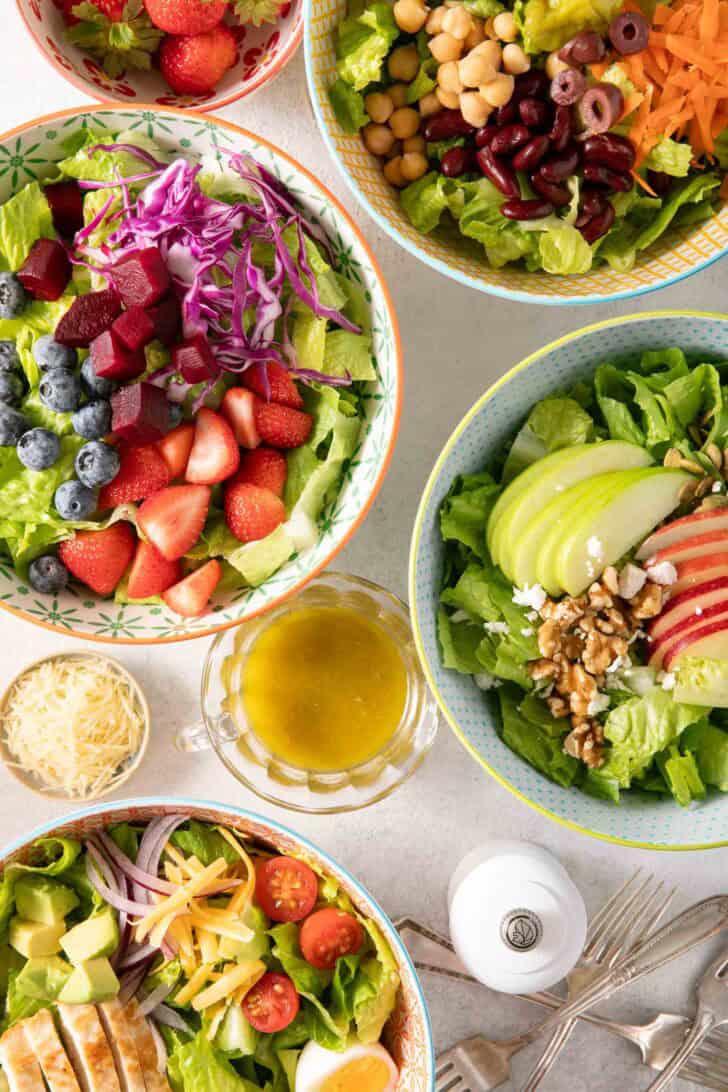
Salads are among the easiest dishes to make, and many of the ingredients can be prepared ahead of time. They’re also a great way to utilize leftovers like grilled chicken or fish or whatever else you have on hand. And they’re great to take to potlucks and backyard barbecues!
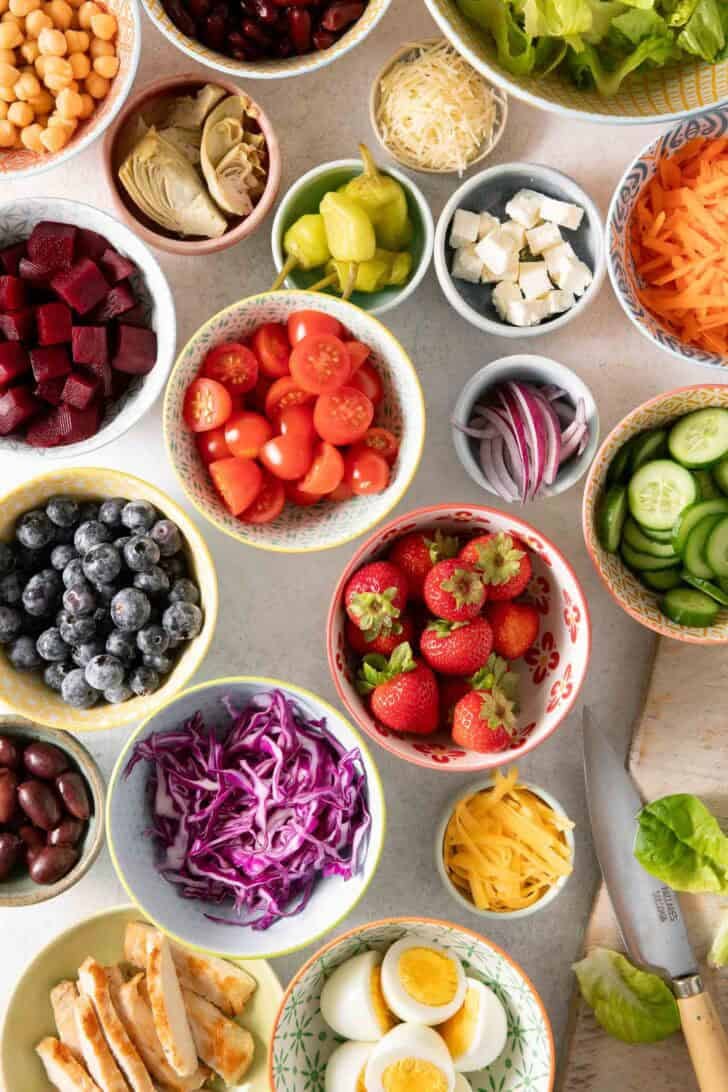
7 Reasons To Love Salads
- Meal Prep. They make a great meal to prep ahead of time. Just prepare the salad ingredients in advance and store in the fridge so you can assemble quickly and easily for lunch or dinner.
- Utilize Leftovers. A great way to utilize leftover chicken, fish, beans, chickpeas, sweet potatoes or beets from the day before.
- Clean Out The Fridge. This is where you can get creative. Use whatever ingredients you have on hand in the fridge to toss with your favorite leafy greens.
- Eat More Veggies. It’s a great way to sneak more veggies into your daily menu.
- Added Protein. Also a great way to sneak more protein into your daily menu, whether it’s chicken or fish, or plant protein.
- Sharing. They’re great to take to potlucks and barbecues. We love taking big crowd-pleasing salads to potlucks and watching them disappear!
- Have Fun. Treat yourself to a beautiful new salad bowl that will inspire you to make big gorgeous, colorful salads. Have fun making your own creations with an assortment of colorful salad ingredients!
What To Put In A Salad
Start off by choosing your favorite greens as the base, then add an assortment of ingredients like vegetables, protein, cheese, grains or whatever else you like.
- Greens. Use about 2-3 cups of greens per person.
- Vegetables and Fruit. Add 1/4 – 1/2 cup of vegetables or fruit.
- Protein. Add 1/3 to 1/2 cup of lean protein or plant protein.
- Cheese. Add 2-3 tablespoons cheese.
- Garnish. Toss in 2-3 tablespoons nuts or seeds.
- Extras. Add 1/4 cup of extras like croutons, tortilla strips, olives, etc.
- Dressing. Toss with about 2-3 tablespoons of dressing.
Types of Greens
For individual servings, we usually plan on 2-3 cups of greens per person. Use simple, crisp leaves that are torn or cut into bite-sized pieces, or you can leave the leaves whole if they’re small. The best salads start with fresh greens. We all have our favorite leafy greens, but here’s a list of greens for you to choose from:
- Arugula – a member of the mustard family. Italians call it “rucola” or “rocket” and the French call it “roquette”. It has a tender leaf with a peppery flavor and a mild scent of pine.
- Butterleaf. Tender and delicately flavored, with soft leaves gathered in a small round shape. Varieties include Bibb and Boston.
- Escarole. Can be eated raw and cooked (often added to soups). The leaves are tart, firm and chewy.
- Iceberg. Also called crisphead. It’s crispy, crunchy and tightly packed. It can be torn, chopped or shredded. Used for wedge salads.
- Looseleaf. Soft, tender leaves with a mellow flavor – also called “bunching” or “cutting” lettuces. They’re red or green leaf lettuce that grow in a cluster of individual leaves.
- Spring Mix. Also called Mesclun is a pre-packaged mix of various young, tender baby greens like baby spinach, arugula, mizuna, and radicchio.
- Kale. Curly kale and lacinato kale (dinosaur kale) are most commonly used.
- Radicchio. There are two varieties of this Italian chicory. One looks like a small cabbage and the other has elongated leaves. Both have a mauve color with ivory colored streaks. Both have a slightly peppery flavor. Add this one to Italian salads.
- Romaine Lettuce. A crisp hearty leafy lettuce that’s used in many salads (like the popular Caesar salad).
- Spinach. The leaves have a fresh flavor and they can be either flat or crinkled. The flat leaves are more delicate.
Salad Toppings
A simple green salad can be transformed into the mother of all salads – the tossed salad – by simply adding an assortment of toppings. A well made salad, one that will impress your family and friends, is a thoughtful mix of selected greens garnished with vegetables, protein, cheese and herbs all tossed in a well balanced dressing. Each ingredient should be chosen for its complimenting flavor, texture and appearance.
Vegetables
Making a big salad every day is a great way to add more vegetables to your menu. Thinly slice, shred, grate or julienne vegetables to add to the mix.
- Asparagus
- Beets
- Broccoli
- Brussel’s sprouts
- Cabbage
- Carrots
- Cauliflower
- Celery
- Corn
- Cucumber
- Fennel
- Jicama
- Mushrooms
- Peas
- Peppers (red, green or yellow)
- Radishes
- Tomatoes and Roma Tomatoes
- Zucchini
Fresh Fruit
We love to add fruit to our salads, especially during the warm summer months.
- Apples
- Avocado
- Blackberries
- Blueberries
- Cantaloupe
- Cherries
- Grapes
- Honeydew Melon
- Mango
- Oranges
- Papaya
- Pomegranate Arils
- Raspberries
- Strawberries
- Watermelon
Dried Fruits
These add a little sweetness, tartness, chewiness and flavor.
- Apricots
- Cranberries
- Dates
- Raisins
Protein
This is what makes a salad a meal.
- Hard boiled Eggs
- Salmon. Fresh or canned.
- Tuna. Fresh or canned.
- Chicken. Use store-bought rotisserie, baked chicken, Pan Seared Chicken, Chicken Milanese, grilled chicken, Shredded Chicken or Poached Chicken.
- Turkey. Fresh Roasted Turkey Breast or deli.
- Bacon. We use turkey bacon fried in a little extra-virgin olive oil.
- Pepperoni. We use turkey pepperoni for an Italian salad.
- Chicken Salad or Tuna Salad. Add a scoop or two of Tzatziki Chicken Salad, Curried Chicken Salad or Tuna Salad on top of a simple green salad
- Ground Turkey Patties. Add a Ground Turkey Patty or ground chicken patty (sliced or chopped) to a simple green salad.
Grains
Adding whole grains makes a more substantially filling salad.
- Quinoa
- Bulgar
- Rice
- Orzo
- Couscous
- Farro
Nuts and Seeds
Nuts and seeds add crunch to the mix. Add them raw or roasted. To pan roast them, just add them to a dry skillet over medium heat and cook for about 3-4 minutes – stirring them and shaking the pan to prevent them from burning.
- Sunflower Seeds
- Honey Roasted Pumpkin Seeds
- Raw Pumpkin Seeds and Pepitas
- Almonds (Slices, Slivered, Marcona)
- Pecans
- Walnuts
Herbs
Fresh herbs add a pop of flavor. We particularly love to add fresh basil, mint and parsley.
Onion
Onion adds color, flavor and texture. To mellow the bite of red onion, thinly slice them first then soak them in a small bowl filled with water for 10-15 minutes. Drain them and pat them dry with paper towels before adding them to the bowl.
- Green Onion
- Red Onion
- Shallots
Legumes
Beans also make a more substantially filling salad.
Cheese
Cheese adds creaminess, texture and flavor to a salad.
- Parmesan
- Feta
- Cheddar
- Jack
- Pepper Jack
- Havarti
- Provolone
- Gorgonzola
- Blue Cheese
- Cotija
- Mozzarella
Pickled Ingredients
We love adding salty ingredients, especially Kalamata olives, to our salads.
- Olives. (Kalamata, Castelvetrano, black, green pimento, Spanish)
- Pepperoncini
- Pickled Jalapenos
- Sun Dried Tomatoes
- Pickled Radishes
- Pickled Onions
Crunchy Salad Toppings
They add a lot of crunch and flavor to the mix. Add them to the salad after it has been tossed with dressing to prevent them from getting soggy.
- Homemade Croutons
- Basil Pesto Croutons
- Parmesan Croutons (you can swap out the parmesan and use cheddar, Gorgonzola or another cheese)
- Baked Pita Chips
- Tortilla Chips
- Tortilla Strips
- Dried Ramen Noodles
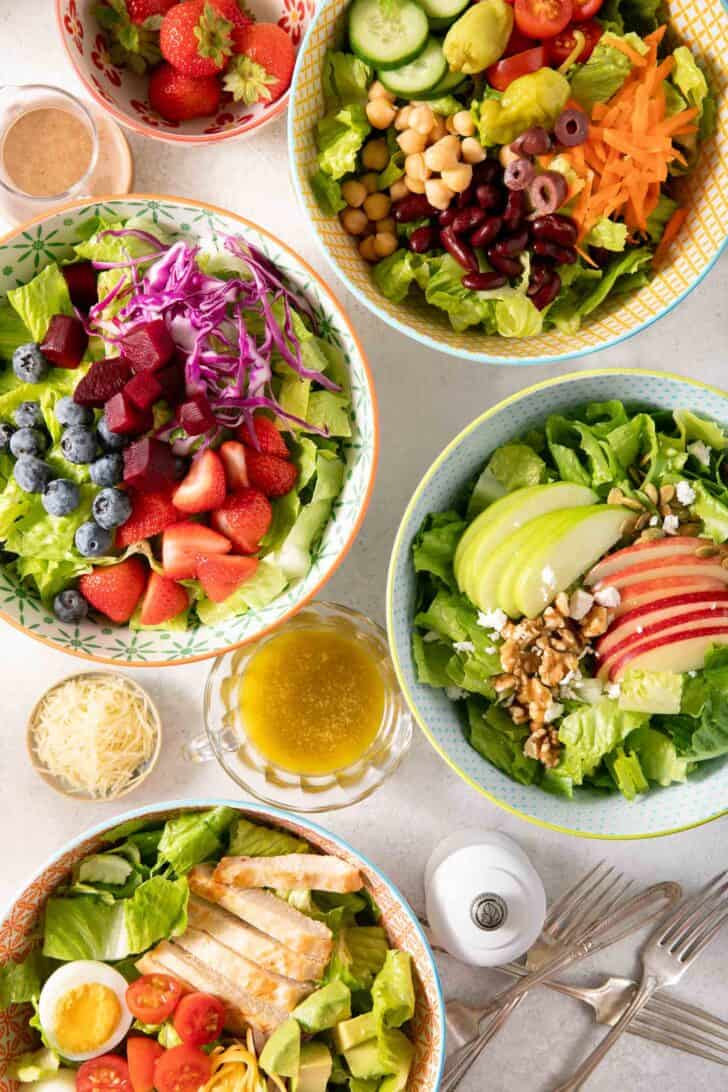
How To Make A Salad
- Choose Fresh Produce. For starters, buy fresh produce discarding any leaves that are wilted, discolored or bruised. It’s often best to eat produce within days of purchase, Romaine can be stored for up to 7 days. The outermost leaves have the most nutrients, so try not to discard too many of them, if possible.
- Rinse Greens. Rinse greens and gently pat dry with paper towels, or toss in a salad spinner if you have one. If you don’t have one, we highly recommend getting one. It makes drying greens so much easier, and the leaves come out nice and crispy after they’re spun! Sort through the greens, discarding any with tough stems, wilted leaves or brown spots.
- Assemble. Toss the greens in your favorite salad bowl, then add your salad toppings, lightly drizzle the dressing around the outer edge of the ingredients and gently fold the dressing into the ingredients. If you pour the dressing right on top of the ingredients, it can weigh down the leaves. You’re aiming to have all of the ingredients evenly coated with the leaves still fresh and crispy looking. Add delicate ingredients like avocado, Feta cheese and raspberries last after you’ve tossed the salad with dressing so they don’t get smashed up in the toss.
How Do You Keep Salad Greens Fresh?
- Unwashed leaves. Store in a plastic bag and refrigerate in the crisper drawer of your refrigerator for up to 10 days.
- Washed leaves. Separate the leaves from the heart and rinse under cold water. Remove any dirt and debris. Pat dry with a paper towel or chop leaves and spin in a salad spinner to dry. Place in a plastic bag or sealed container and store in the crisper drawer of your refrigerator for up to 1 week.
Dressing Salads
Homemade dressings taste far superior to the store-bought stuff and they take only minutes to make. For a basic dressing you can use extra-virgin olive oil or avocado oil and vinegar or lemon juice. Toss in some fresh herbs and season with a pinch of salt and black pepper. To make a vinaigrette, just add the ingredients to a wide-mouth mason jar and seal the lid tightly, then shake vigorously. You can also use an immersion blender (stick blender) to blend the ingredients in the mason jar. Add a teaspoon or two of water to mellow the vinegar or lemon juice if needed. Always toss the greens just before serving to avoid wilting. Toss the greens gently so the ingredients are evenly and lightly coated. When prepping ahead of time, store the dressing and greens separately in airtight containers in the refrigerator until you’re ready to serve.
To make a vinaigrette, a good rule of thumb is using a ratio of 3:1. Three parts oil to one part vinegar (3/4 cup extra-virgin olive oil and 1/4 cup vinegar or 3 tablespoons olive oil and 1 tablespoon vinegar for an individual serving). For an individual serving, you can also add a teaspoon of Dijon mustard to emulsify the dressing. Season with a pinch of salt and black pepper.
Top 10 Salad Dressings
When you start making homemade salad dressings, you’ll forget all about your old favorite store-bought commercial dressings! Homemade dressings are super easy to make and you control the ingredients – like sodium and sugar, and there’s no artificial sweeteners or additives. Here’s the top 10 salad dressings that people like:
- Buttermilk Ranch Dressing
- Zesty Italian Dressing
- Blue Cheese Dressing
- Thousand Island Dressing
- Greek Dressing
- Honey Lemon Vinaigrette
- Red Wine Vinaigrette
- Best Balsamic Vinaigrette
- Apple Cider Vinegar Dressing
- Lemon Olive Oil Dressing
If you want more salad dressing ideas, check out all of our Salad Dressing Recipes.
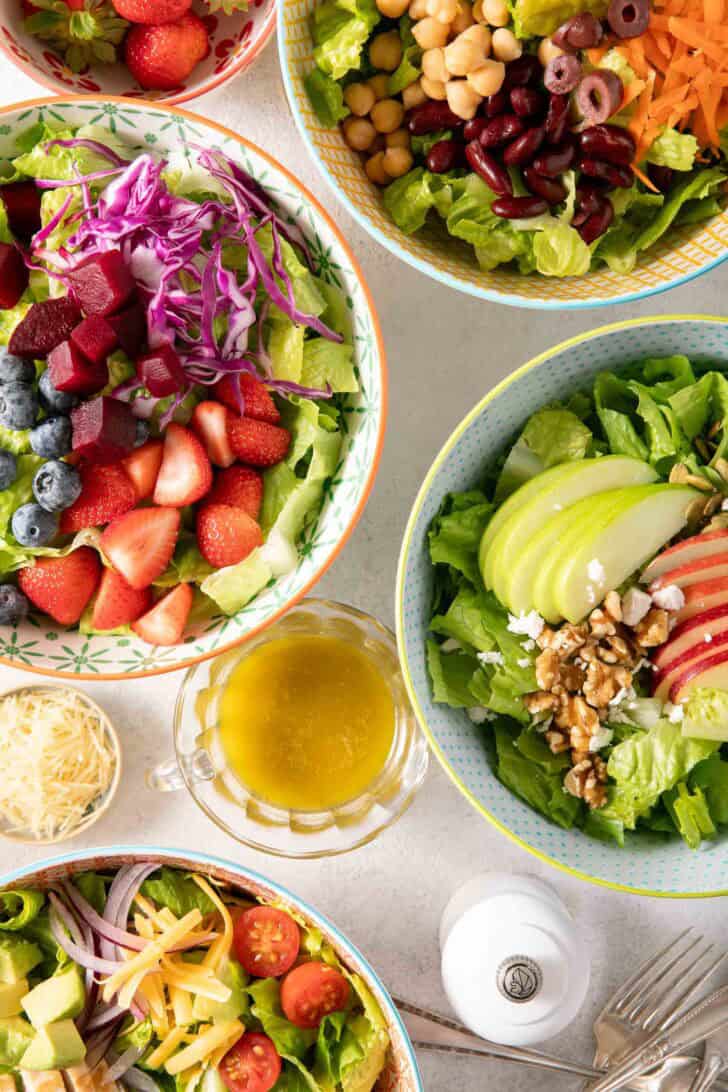
Salad Recipes
- Italian Chopped Salad
- Greek Chopped Salad
- Chopped Salad
- Spring Mix Salad
- Chicken Cobb Salad
- Lemon Arugula Salad
- Simple Kale Salad
- Lemon Parmesan Lettuce Salad
- Garden Salad
- Chicken Mediterranean Salad
Still want more ideas? Check out all of our Salad Recipes.

Salad Topping Ideas
Salads should never be boring! So that's why we've put together a list of the best Salad Topping Ideas (more than just the standard salad bar toppings) to help you create big beautiful salads that you will love! If you like salads like we do, then you likely appreciate that there are so many ways to get creative with them. So what to put in a salad? It depends! They can be made to be nothing more than a simple starter, or they can be made meal-worthy crowded with ingredients that'll leave you feeling fully satisfied.
Ingredients
- 2-3 cups of salad greens
- 1/4 - 1/2 cup of vegetables or fruit
- 1/3 to 1/2 cup of lean protein or plant protein
- 2-3 tablespoons cheese
- 2-3 tablespoons nuts or seeds
- 1/4 cup of extras like croutons, tortilla strips, olives, etc.
For the Vinaigrette
- 1/4 cup extra-virgin olive oil
- 1 tablespoon vinegar (red vinegar or apple cider vinegar)
- 1 teaspoon Dijon mustard
- Pinch of salt and black pepper
Instructions
- Add the ingredients for the vinaigrette to a wide-mouth mason jar. Seal the lid and shake vigorously. You can also use a stick blender (immersion blender) to blend the ingredients in the mason jar.
- Toss the greens in your favorite salad bowl, then add your salad toppings. Lightly drizzle the dressing around the outer edge of the ingredients and gently fold the dressing into the ingredients. Add delicate ingredients like avocado, Feta cheese and raspberries last after you've tossed the salad with dressing so they don't get smashed up in the toss.
Nutrition Information:
Yield:
1Serving Size:
1Amount Per Serving: Calories: 899Total Fat: 77gSaturated Fat: 11gUnsaturated Fat: 66gCholesterol: 1mgSodium: 373mgCarbohydrates: 46gFiber: 5gSugar: 1gProtein: 14g
theharvestkitchen.com attempts to provide accurate information, however, this nutritional information is provided as a courtesy and is an estimate only. The nutritional information provided comes from online sources and calculations. See full disclaimer on About page.